Mānuka honey, widely recognised as nature’s therapeutic gold, is produced from the nectar of Leptospermum species and valued for its unique antimicrobial and medicinal properties. Beyond its biological activity, growing attention is being directed toward its complex origins, as well as the evolving economic and regulatory challenges that shape the global mānuka honey market.
Manuka honey: introduction
The primary source is Leptospermum scoparium, native to New Zealand and parts of southeastern Australia, though significant academic debate exists regarding whether these represent the same species. Recent genetic analysis using single nucleotide polymorphism (SNP) in Leptospermum scoparium (Myrtaceae) supports the view that the New Zealand and Australian populations may constitute two highly differentiated endemic species (Chagné et al., 2023). Furthermore, Australian regulations permit honey from any Leptospermum species to be labeled as manuka, unlike New Zealand’s more restrictive approach focusing solely on L. scoparium.
This monofloral honey has garnered worldwide attention for its exceptional therapeutic properties, containing significantly higher concentrations of methylglyoxal (MGO) than conventional honey varieties (Adams et al., 2008). While manuka honey as we know it only came into existence after European settlers introduced Apis mellifera (honeybees) to New Zealand in the 19th century, the Māori people had long utilized the manuka plant itself for traditional medicinal purposes, including teas and topical preparations. The relationship between Māori and manuka remains a sensitive topic, with organizations like the Manuka Charitable Trust (MCT) actively pursuing legal protection of intellectual rights related to the manuka name and associated products.
Manuka honey, key characteristics
Manuka honey possesses several distinctive characteristics that differentiate it from other honey varieties. Its colourranges from a creamy light amber to a rich dark brown, with a thick, viscous consistency that resists flowing quickly. The flavour profile is uniquely complex—earthy, slightly bitter, with herbaceous and woody undertones that provide a distinctly aromatic experience.
The New Zealand Ministry for Primary Industries (MPI) has established a scientific definition for manuka honey, requiring specific chemical and DNA markers for authentication, though this definition remains a subject of considerable industry debate with various producers holding conflicting views on its appropriateness and implementation.
The most significant distinguishing feature is its extraordinarily high content of methylglyoxal (MGO), dihydroxyacetone (DHA), and leptosperin, compounds rarely found in substantial quantities in other honey types (Kwakman & Zaat, 2012). These bioactive compounds contribute to its remarkable non-peroxide antibacterial activity, allowing it to maintain medicinal efficacy even when exposed to heat, light, and enzymes that would neutralise the antibacterial properties of ordinary honey. This stability makes manuka honey particularly valuable in therapeutic applications.
Ecological and economic importance
The manuka ecosystem holds tremendous ecological significance in New Zealand and southeastern Australia, where Leptospermum spp. serve as a pioneer species that can colonise disturbed or nutrient-poor soils, helping to prevent erosion and prepare the land for succession by other native plants. The flowering manuka bushes support numerous pollinators beyond honey bees, including native insects essential to New Zealand’s biodiversity.
The economic landscape of the manuka honey industry has undergone significant changes in recent years. While the industry once commanded premium prices, wholesale prices have experienced substantial declines, leading to financial distress for many producers and resulting in numerous business administrations. This market correction has reshaped the industry’s structure and challenged the previously held assumption of continuously rising values.
Despite these challenges, manuka honey production continues to offer potential for sustainable development where native reforestation can complement economic activity, though returns are now more modest than during the industry’s peak years.
Manuka honey and its unique features
Manuka honey’s most distinguishing feature is its exceptional non-peroxide antibacterial activity, derived primarily from its unusually high methylglyoxal (MGO) content. While conventional honey varieties rely on hydrogen peroxide for their antibacterial properties — an unstable compound easily destroyed by light, heat, and bodily fluids — manuka honey’s activity persists under these conditions.
The formation of methylglyoxal in manuka honey occurs through a remarkable chemical process: dihydroxyacetone (DHA) present in the nectar of Leptospermum flowers gradually converts to MGO during the honey’s maturation. This conversion continues after harvesting, which is why properly aged manuka honey often develops greater therapeutic potency over time.
Another unique characteristic is the presence of leptosperin, a naturally occurring chemical found almost exclusively in manuka honey, which serves as a reliable marker for authentication. As noted by Adams et al. (2008), ‘The isolation and characterisation of this fraction represents a significant step forward in understanding the components responsible for the non-peroxide antibacterial activity of manuka honey’. Various rating systems including Unique Manuka Factor (UMF) and MGO ratings have been developed to quantify these compounds, providing consumers with measurements of the honey’s bioactivity.
Health properties, at a glance
Manuka honey offers several evidence-based health benefits supported by clinical and laboratory research, as follows:
- antimicrobial activity. Manuka honey demonstrates potent antimicrobial activity against a wide range of pathogens, including antibiotic-resistant strains. Research has confirmed its effectiveness against methicillin-resistant Staphylococcus aureus (MRSA), vancomycin-resistant enterococci (VRE), and extended-spectrum β-lactamase producing bacteria (Kwakman & Zaat, 2012; Carter et al., 2016);
- wound healing. A Cochrane systematic review found that honey healed partial thickness burns more quickly than conventional treatments and was effective for infected post-operative wounds (Jull et al., 2015). Meta-analysis of burn treatment showed honey was 6-7 times more effective than conventional dressings for healing at 15 days (Wijesinghe et al., 2009);
- diabetic foot ulcers. A randomized controlled trial demonstrated that manuka honey-impregnated dressings significantly reduced healing time for neuropathic diabetic foot ulcers (31 days vs. 43 days for conventional dressings), with 78% of ulcers becoming sterile within the first week (Kamaratos et al., 2014);
- oral health. Clinical trials have shown manuka honey (UMF 15+) significantly reduces dental plaque scores and gingival bleeding. After 21 days of use, mean plaque scores reduced from 0.99 to 0.65, and bleeding sites decreased from 48% to 17% (English et al., 2004);
- gastrointestinal applications. Laboratory studies demonstrated that manuka honey inhibits Helicobacter pylori growth completely at concentrations of 5% (v/v) (Al Somal et al., 1994). Research also shows antimicrobial activity against Clostridioides difficile, though effectiveness varies among strains (Hammond & Donkor, 2013; Yu et al., 2020);
- respiratory applications. A systematic review and meta-analysis found honey superior to usual care for improving symptoms of upper respiratory tract infections, including cough frequency and severity (Abuelgasim et al., 2020). Cochrane reviews indicate honey may be better than no treatment for reducing cough in children, though evidence quality varies (Oduwole et al., 2018);
- prebiotic effects. In vitro studies demonstrate that manuka honey promotes growth of beneficial bacteria including Lactobacillus reuteri, L. rhamnosus, and Bifidobacterium lactis while inhibiting pathogens (Rosendale et al., 2008). The prebiotic effect is attributed to oligosaccharides that escape digestion and serve as substrate for beneficial gut bacteria (Schell et al., 2022).
Manuka honey production
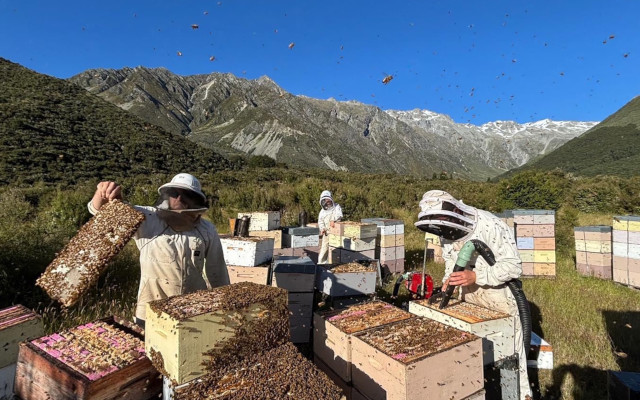
Manuka honey production presents unique challenges that contribute to its market positioning. The Leptospermum plants typically flower for just 2-6 weeks annually, providing beekeepers with a narrow window for nectar collection. Weather conditions during this brief flowering period significantly impact yield, creating considerable year-to-year variability.
Beekeeping operations targeting manuka often place hives in remote, difficult-to-access locations where manuka grows abundantly, increasing production costs and logistical challenges. The bees must be carefully managed to focus on manuka flowers rather than other available floral sources, which can affect the honey’s purity and bioactive properties.
Post-harvest processing requires stringent controls to preserve the honey’s bioactive compounds. Unlike conventional honey production, manuka honey undergoes extensive laboratory testing to authenticate its origin and quantify its bioactive compounds — a necessary but costly process that ensures consumers receive genuine manuka honey with the advertised therapeutic properties.
Some manuka honey certification systems
Several certification systems exist to authenticate manuka honey and quantify its bioactive properties. The Unique Manuka Factor (UMF) rating, established by the UMF Honey Association, measures methylglyoxal (MGO), dihydroxyacetone (DHA), and leptosperin. However, industry perspectives on UMFHA standards vary considerably, with some producers noting requirements such as mandatory packing in New Zealand (with Grade One limited to bulk only) as potentially restrictive rather than quality-focused.
The MGO certification system directly measures methylglyoxal concentration in mg/kg, providing straightforward quantification without accounting for other beneficial compounds. The K Factor system focuses on pollen count and raw status, emphasizing purity and traceability. The NPA (Non-Peroxide Activity) rating measures antibacterial efficacy through laboratory testing.
The New Zealand government’s definition of Manuka Honey requires DNA testing for Leptospermum scoparium pollen and chemical testing for specific markers. As stated by the Ministry for Primary Industries (MPI, 2018), ‘This robust scientific definition, backed by testing requirements, ensures that consumers can have confidence that the manuka honey they are purchasing is authentic’. However, this definition remains contentious within the industry, with ongoing debates about its implementation and effectiveness.
Conservation and threats
The manuka honey industry faces multiple sustainability challenges. Climate change affects flowering times, nectar production, and bee foraging behaviors, with droughts stressing plants and excessive moisture preventing effective nectar collection.
Habitat loss from land development threatens wild manuka populations, though the economic value of manuka has incentivized some conservation efforts. Invasive plant species compete with manuka for resources, while disease pressures affect both plants and bee populations. Myrtle rust, detected in New Zealand in 2017, poses a potential long-term threat to manuka populations, while honey bee colonies face challenges from varroa mites, American foulbrood disease, and chemical pesticides.
Conservation initiatives include sustainable harvesting practices, disease resistance research, and restoration projects. The long-term viability of the industry depends on balancing economic utilization with ecological stewardship.
Health claims regulatory framework
The marketing of manuka honey’s health properties faces strict regulatory oversight, particularly within the European Union. Regulation (EU) No 1169/2011 on the provision of food information to consumers establishes foundational principles governing health-related communications. The European Commission (2021) stipulates that ‘Food information shall not attribute to any food the property of preventing, treating or curing a human disease, nor refer to such properties’.
Regulation (EC) No 1924/2006 on nutrition and health claims requires pre-approval by the European Food Safety Authority (EFSA) for any health benefit claims. Currently, no manuka-specific health claims have received authorization, despite growing research support.
This regulatory environment creates challenges for educating consumers about evidence-based applications, as noted by Carter et al. (2016): ‘Despite the substantial body of evidence supporting the clinical efficacy of manuka honey, particularly in wound care applications, regulatory frameworks have not kept pace with scientific developments’.
Regulatory challenges at Codex Alimentarius and EU levels
Manuka honey faces complex regulatory challenges in international markets. At the Codex level, manuka honey must comply with the Codex Alimentarius Standard for Honey (Codex Stan 12-1981, revised 2001), which sets global parameters but does not specifically address manuka honey’s unique properties. According to FAO & WHO (2019), ‘The existing Codex honey standard does not yet include specific provisions for identifying monofloral honey varieties or addressing the unique bioactive properties of certain honey types such as manuka’.
Within the European Union, manuka honey must comply with Council Directive 2001/110/EC (the Honey Directive) and Directive 2014/63/EU (the ‘Breakfast Directive’). These establish legal definitions, specifications, and labelling requirements, with the Breakfast Directive clarifying that pollen is a natural constituent rather than an ingredient.
Trademark and geographical indication protections remain contentious, with New Zealand seeking to protect ‘manuka’ as a geographical indication. These efforts have yielded mixed results internationally, creating a fragmented regulatory landscape.
Provisional conclusions
Manuka honey represents a convergence of traditional knowledge and modern science, with research validating its therapeutic properties. However, the industry faces significant challenges including market volatility, regulatory complexities, and sustainability concerns.
The authentication systems and scientific research continue to evolve, with applications in wound care, oral health, and potentially in combating antibiotic resistance showing promise. The development of standardised medical-grade products bridges natural remedies and evidence-based healthcare.
Future sustainability depends on balancing demand with ecological stewardship, addressing climate impacts, and navigating regulatory challenges. Despite recent market corrections, manuka honey remains positioned as an important therapeutic resource. As Johnston et al. (2018) concludes, ‘The antibacterial activity of manuka honey and its components represents a valuable resource in the global effort to combat the rising tide of antimicrobial resistance’.
Dario Dongo
Cover image courtesy Tim Read
References
- Abuelgasim, H., Albury, C., & Lee, J. (2020). Effectiveness of honey for symptomatic relief in upper respiratory tract infections: a systematic review and meta-analysis. BMJ Evidence-Based Medicine, 26(2), 57-64. https://doi.org/10.1136/bmjebm-2020-111336
- Adams, C. J., Boult, C. H., Deadman, B. J., Farr, J. M., Grainger, M. N. C., Manley-Harris, M., & Snow, M. J. (2008). Isolation by HPLC and characterisation of the bioactive fraction of New Zealand manuka (Leptospermum scoparium) honey. Carbohydrate Research, 343(4), 651-659. https://doi.org/10.1016/j.carres.2007.12.011
- Carter, D. A., Blair, S. E., Cokcetin, N. N., Bouzo, D., Brooks, P., Schothauer, R., & Harry, E. J. (2016). Therapeutic manuka honey: No longer so alternative. Frontiers in Microbiology, 7, 569. https://doi.org/10.3389/fmicb.2016.00569
- Chagné, D., Montanari, S., Kirk, C., Mitchell, C., Heenan, P., & Koot, E. (2023). Single nucleotide polymorphism analysis in Leptospermum scoparium (Myrtaceae) supports two highly differentiated endemic species in Aotearoa New Zealand and Australia. Tree Genetics & Genomes, 19, Article 31. https://doi.org/10.1007/s11295-023-01606-w
- Codex Alimentarius Commission. (2001). Codex Standard for Honey (CODEX STAN 12-1981, Rev. 2001). Food and Agriculture Organization of the United Nations and World Health Organization.
- Council Directive 2001/110/EC of 20 December 2001 relating to honey. Consolidated text to 23/06/2014: http://data.europa.eu/eli/dir/2001/110/2014-06-23. See also Directive (EU) 2024/1438 of the European Parliament and of the Council of 14 May 2024 amending Council Directives 2001/110/EC relating to honey (…). http://data.europa.eu/eli/dir/2024/1438/oj
- Hammond, E. N., & Donkor, E. S. (2013). Antibacterial effect of Manuka honey on Clostridium difficile. BMC Research Notes, 6, Article 188. https://doi.org/10.1186/1756-0500-6-188
- Johnston, M., McBride, M., Dahiya, D., Owusu-Apenten, R., & Nigam, P. S. (2018). Antibacterial activity of manuka honey and its components: An overview. AIMS Microbiology, 4(4), 655-664. https://doi.org/10.3934/microbiol.2018.4.655
- Jull, A. B., Cullum, N., Dumville, J. C., Westby, M. J., Deshpande, S., & Walker, N. (2015). Honey as a topical treatment for wounds. Cochrane Database of Systematic Reviews, (3), Article CD005083. https://doi.org/10.1002/14651858.CD005083.pub4
- Kwakman, P. H., & Zaat, S. A. (2012). Antibacterial components of honey. IUBMB Life, 64(1), 48-55. https://doi.org/10.1002/iub.578
- Ministry for Primary Industries. (2017, April 7). Criteria for identifying mānuka honey: Summary of the mānuka honey science programme. New Zealand Ministry for Primary Industries. https://www.mpi.govt.nz/dmsdocument/17314-criteria-for-identifying-mānuka-honey-summary-report
- Ministry for Primary Industries. (2018, July 26). Mānuka honey science definition – Infographic. New Zealand Ministry for Primary Industries. https://www.mpi.govt.nz/dmsdocument/17374-manuka-honey-science-definition-infographic
- Molan, P. C. (2002). Re-introducing honey in the management of wounds and ulcers – theory and practice. Ostomy/Wound Management, 48(11), 28-40. https://pubmed.ncbi.nlm.nih.gov/12426450/
- Oduwole, O., Udoh, E. E., Oyo-Ita, A., & Meremikwu, M. M. (2018). Honey for acute cough in children. Cochrane Database of Systematic Reviews, (4), Article CD007094. https://doi.org/10.1002/14651858.CD007094.pub5
- Regulation (EU) No 1169/2011 of the European Parliament and of the Council of 25 October 2011 on the provision of food information to consumers, amending Regulations (EC) No 1924/2006 and (EC) No 1925/2006 of the European Parliament and of the Council. Consolidated text: 01/04/2025. http://data.europa.eu/eli/reg/2011/1169/2025-04-01
- Roberts, A. E., Brown, H. L., & Jenkins, R. E. (2015). On the antibacterial effects of manuka honey: Mechanistic insights. Research and Reports in Biology, 6, 215-224. https://doi.org/10.2147/RRB.S75754
- Rosendale, D. I., Maddox, I. S., Miles, M. C., Rodier, M., Skinner, M., & Sutherland, J. (2008). High-throughput microbial bioassays to screen potential New Zealand functional food ingredients intended to manage the growth of probiotic and pathogenic gut bacteria. International Journal of Food Science and Technology, 43(12), 2257-2267. https://doi.org/10.1111/j.1365-2621.2008.01863.x
- Schell, K. R., Fernandes, K. E., Shanahan, E., Wilson, I., Blair, S. E., Carter, D. A., & Cokcetin, N. N. (2022). The potential of honey as a prebiotic food to re-engineer the gut microbiome toward a healthy state. Frontiers in Nutrition, 9, Article 957932. https://doi.org/10.3389/fnut.2022.957932
- Wijesinghe, M., Weatherall, M., Perrin, K., & Beasley, R. (2009). Honey in the treatment of burns: a systematic review and meta-analysis of its efficacy. New Zealand Medical Journal, 122(1295), 47-60. https://pubmed.ncbi.nlm.nih.gov/19648986/
- Yu, L., Palafox-Rosas, R., Luna, B., & She, R. C. (2020). The bactericidal activity and spore inhibition effect of Manuka honey against Clostridioides difficile. Antibiotics, 9(10), Article 684. https://doi.org/10.3390/antibiotics9100684