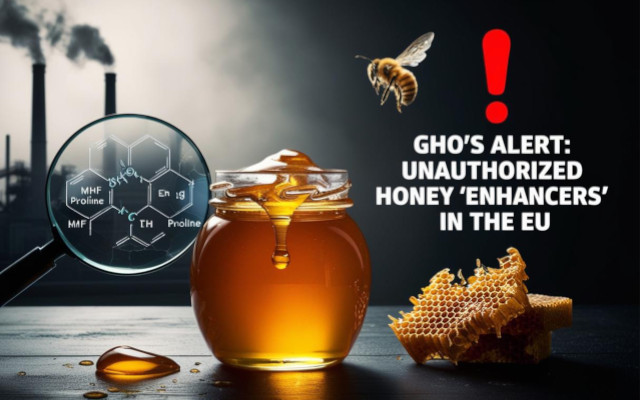
Honey, a natural sweetener cherished for its nutritional and medicinal properties, is increasingly vulnerable to economically motivated adulteration. Fraudulent practices, such as the addition of sugar syrups or feeding bees with syrups during nectar flow, undermine the integrity of honey and erode consumer trust. To combat this, robust analytical methods are essential.
A landmark study by researchers at the European Commission’s Joint Research Centre (JRC) has validated Liquid Chromatography-Isotope Ratio Mass Spectrometry (LC-IRMS) as a reliable tool for detecting honey adulteration (Ulberth et al., 2024). This method, now standardized by the European Committee for Standardization (CEN), provides a scientifically sound basis for authenticity assessments.
The Global Honey Organisation (GHO) fully endorses this approach, recognising LC-IRMS as the gold standard for honey purity testing until further innovative methods are validated under stringent conditions. Contrary to alarmist claims, such as those in the European Commission’s From the Hives report (2023) — which DEFRA has criticised as being built on unsubstantiated presumptions — the scientific evidence supports the reliability of most extra-EU honeys, including those from China.
The Science Behind LC-IRMS
LC-IRMS measures the stable carbon isotope ratios (δ¹³C) of individual sugars in honey, such as fructose, glucose, disaccharides, and trisaccharides. Authentic honey exhibits consistent δ¹³C patterns, whereas adulterated samples show deviations due to the introduction of exogenous sugars. The study by Ulberth et al. (2024) highlights:
- precision and reproducibility. The method’s repeatability (sᵣ) and reproducibility (sᵣ) were rigorously tested across 14 laboratories, confirming its reliability for detecting even minor adulterations (1–2% C4 plant syrups and 10–20% C3 plant syrups);
- critical differences (CD). The study introduced CD values to account for measurement uncertainty, ensuring accurate compliance assessments against purity criteria (e.g., Δδ¹³C [fructose-glucose] ≤ ±1%, Δδ¹³C max ≤ ±2.1%).
These advancements address previous limitations, such as those of AOAC Official Method 998.12, which fails to detect low-level C4 syrup adulteration.
Debunking misconceptions: the case of extra-EU honey
Recent reports, including the EU’s From the Hives, have unjustly cast doubt on the authenticity of extra-EU honeys, particularly those from China. However, the JRC study underscores that:
- adulteration is not systemic. The LC-IRMS data reveal that purity violations are sporadic, not widespread;
- methodology matters. Claims of ‘systematic fraud’ rely on inconsistent or outdated methods, whereas LC-IRMS provides definitive, reproducible results.
DEFRA’s critique of the EU report aligns with this view, emphasising the need for evidence-based assessments rather than speculative alarms.
Recommendations for stakeholders
Official Control Laboratories:
- Adopt LC-IRMS as the primary method for honey authenticity testing, following the provisions of Official Controls Regulation (EU) 2017/625 https://www.globalhoney.org/news-gho/honey-authenticity-and-analysis-methods-to-be-applied-in-the-eu/ and CEN standard prEN 17958:2024.
- Use critical differences (CD) to minimise false positives (e.g., CD of 0.7% for Δδ¹³C [fructose-glucose] and 1.1% for Δδ¹³C max).
Private Laboratories:
- Align testing protocols with ISO 5725-6:1994 and ISO 21748:2017 to ensure consistency.
- Prioritise duplicate analyses to confirm suspicious results.
Policymakers:
- Reject unsubstantiated claims and promote science-based trade policies.
- Recognise the quality of extra-EU honey, which meets global standards when tested rigorously.
Conclusion
The JRC study affirms LC-IRMS as the most reliable method for honey authenticity testing, providing a robust defence against fraud while safeguarding the reputation of legitimate producers.
The GHO urges all stakeholders to embrace this method, dispel baseless allegations, and celebrate the value of natural honey for consumers worldwide.
Together, we can ensure transparency, trust, and fairness in the global honey market.
Dario Dongo
References
- Ulberth, F., Aries, E., De Rudder, O., Kaklamanos, G., & Maquet, A. (2024). Purity assessment of honey based on compound-specific stable carbon isotope ratios obtained by LC-IRMS. Journal of AOAC INTERNATIONAL, 107(5), 884–887. https://doi.org/10.1093/jaoacint/qsae021
- Dario Dongo. Non-EU import honey, the European Commission’s ambiguous report. FT (Food Times). 19 July 2023
- Defra (Department for Environmental, Food and Rural Affairs, UK). Review of methods applied in the ‘From the Hives’ survey on honey authenticity. 13 February 2025 https://tinyurl.com/4a3w2uvy
- Elflein, L., & Raezke, K.-P. (2008). Improved detection of honey adulteration by measuring differences between δ¹³C values of protein and sugar compounds with a combination of elemental analyzer and LC-IRMS. Apidologie, 39, 574–587. https://doi.org/10.1051/apido:2008042
- ISO. (2019). Accuracy (trueness and precision) of measurement methods and results—Part 2: Basic method for the determination of repeatability and reproducibility of a standard measurement method (ISO 5725-2:2019).
- DEFRA. (2023). Response to the EU “From the Hives” report on honey authenticity. Retrieved from [DEFRA website].
- European Commission. (2023). EU coordinated action to deter fraudulent practices in the honey sector (EUR 31461 EN). https://doi.org/10.2760/184511
For further reading, see the supplemental data in the original study and CEN standard prEN 17958:2024.